


Somewhere in your progress, you want to knit to the next level of techniques.
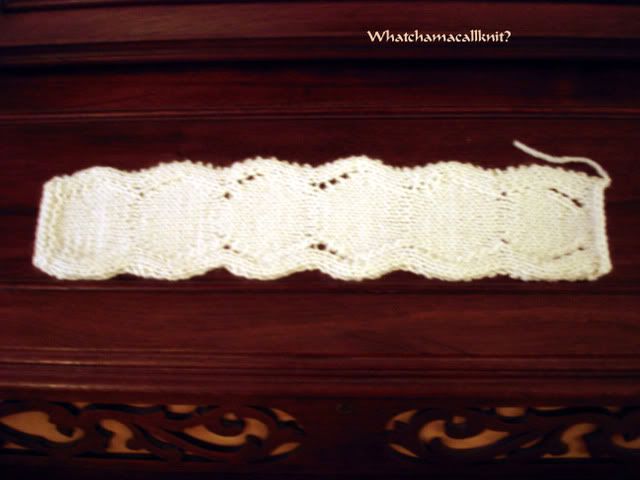
For a beginner, one of these is a lesson of increases & decreases. Sure, a 'make one' gets the job done... but it's just the basic beginner increase. After reviewing two good samplers on the net (Knitting Helpand NonaKnits),
I combined their shaping stitches with ones gleaned from my reference books: Mary Thomas's Knitting Handbook, Vogue Knitting, the Knitter's Handbook (Reader's Digest) and the Knitter's Handbook (Knitter's Magazine). I have bought tags to attach to the sampler to record the stitches until I can discern them by sight.
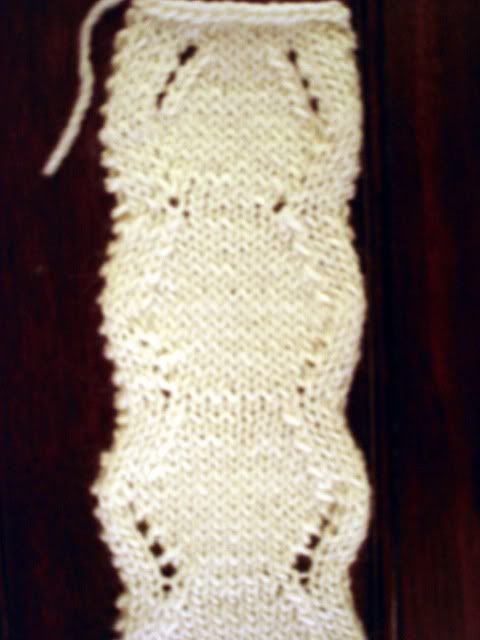
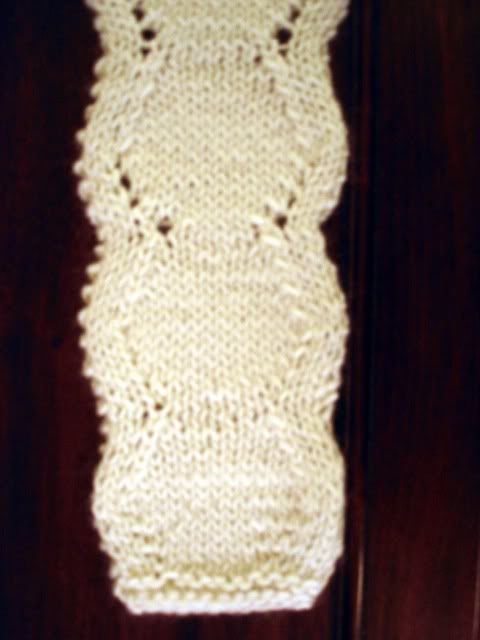
I've left the tail on the bind-off. The second picture bottom rows show the beginning cast-on and garter stitching.
Beginners, please note that abbreviations do not appear to be standardized.
- Multiple references may use different abbreviations for the same stitch.
- Multiple references may use the same abbreviation for different stitches.
- Some references give the increase or decrease a name without abbreviations.
- Others use their own terms as reference (June Hiatt for example).
- ALWAYS, check your source pattern to determine which method their abbreviation is referring to be used. For example, compare M1L in Mary Thomas’s Knitting Book to the Knitter’s Handbook. Same abbreviation, different stitches.
|
|
|
|
|
| SHAPING | LEFT SIDE | RIGHT SIDE | NOTES |
| Bind-off leaving tail. |
|
|
|
| Decrease | yo dec rs | yo dec ls | KnittingHelp.com |
| Increase | MI | MI | Vogue’s median increase |
| Decrease | k2tog | k2tog tbl | Vogue |
| Increase | M1 | M1 | EZ’s method |
| Decrease | k2tog | ssk new improved | NonaKnits |
| Increase | yo | yo |
|
| Decrease | krpr | skp (s1k1psso) | KnittingHelp.com |
| Increase | M1R make 1 right | M1L make 1 left | make one |
| Decrease | k2tog | ssk improved | KnittingHelp.com NonaKnits |
| Increase | M1L lift stitch before | M1L lift stitch after | lifted increase |
| Decrease | k2tog | ssk |
|
| Increase | M1B | M1B | bar increase, k1f&b or kfb |
| Cast-on |
|
| long tail method |




 © Idealpes SARL -

